When AI Should (And Shouldn’t) Impact Your Keyword Strategy

Should you change your SEO strategy for AI search and answer engine optimization? Short answer: it depends.
You’ve spent years understanding how search works. You can map intent, build topical depth, and increase rankings without chasing trends.
But lately, it feels like the ground is shifting. AI Overviews are eating up SERPs real estate. Clients are asking how to rank in ChatGPT. And now, everyone on LinkedIn is telling you to adjust your keyword strategy to “optimize for AI.”
The real problem isn’t AI. It’s the pressure to react to it without understanding when it actually matters because not every shift in the SERP demands a change in strategy. Some do, but most don’t. Knowing the difference is where you win.
This article will show you when AI should (and shouldn’t) impact your keyword strategy, with a straight look at SERP elements that matter. We’ll also explain how to adjust your SEO strategy for AI search engines and generative search platforms.
TL;DR: To Change or Not to Change Your SEO Strategy
Change your SEO strategy to accommodate LLM platforms if:
- You want your brand cited in AI-generated answers
- You rely heavily on top-of-funnel, informational content
- You’re targeting audiences who actively use AI tools to search
- Your content already performs well, but lacks AI visibility
- You’re building semantic authority around a niche topic
Stick with optimizing for Google and other search engines if:
- Your main goal is driving high-intent, click-through traffic
- You work in an industry with low AI search adoption
- AI mentions aren’t converting or supporting key business goals
- Your SEO fundamentals still need work
- You’re optimizing for hyper-local or visual search behavior
Understanding AI Search Platforms vs. Traditional Search Engines
SEO isn’t dead, and AI platforms will remain an alternative search platform to search engines.
No doubt that AI search platforms have gained traction in recent years. But search engines will remain relevant.
Let’s see how both platforms differ from each other:
| Aspect | AI Search Platforms (LLMs, AEO) | Traditional Search Engines (Google, SEO) |
| User Experience | Provides simplified answers, often reducing the need to click through to external sites | Displays a list of links (SERPs) for users to select and visit |
| Data Source | Trained on large datasets (web, books, articles); can use real-time retrieval (RAG) | Crawls and indexes live web pages; updates the index regularly |
| Query Handling | Handles complex, conversational, and multi-step queries; focuses on user intent and context | Matches keywords and intent; supports lexical and semantic search |
| Output Format | Summaries, direct answers, conversational responses, citations | Blue links, featured snippets, knowledge panels, ads, and more. |
| Citation/Attribution | May provide citations or mention sources within generated content | Links directly to original web pages; source always visible |
| Ranking Factors | Prioritizes authoritative, well-structured, and semantically rich content; entity and context-driven | Uses hundreds of signals: keywords, backlinks, E-E-A-T, usability, technical SEO |
| Personalization | Can personalize based on prompt context, previous interactions, or user profile | Personalizes via location, search history, device, and user settings |
| Optimization Approach | Generative Engine Optimization (GEO): focuses on entities, context, structured data, and earning citations | Search Engine Optimization (SEO): keyword research, on-page, technical, backlinks |
Despite these vast differences, AI platforms don’t function independently. LLMs indirectly use SERP data (snippets, knowledge graphs) as source material.
Let’s start with Google AI Overviews.
Google mentioned that AI Overviews appear when you want information from various sources, likeGoogle’s Knowledge Graph. That means AI Overviews pull information from SERP features.
Google AI Overviews documentations
Perplexity gets insights from top-tier sites on SERPs.
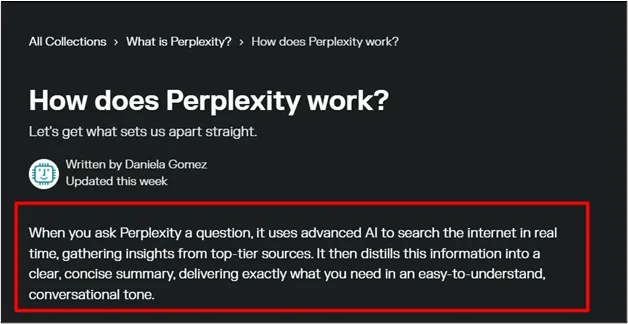 Excerpt on how Perplexity gets its information
ChatGPT has historically relied on Bing Search as an information source. More so, 87% of ChatGPT citations match Bing first-page search results.
Are we downplaying AI platforms?
Never! If you aren’t optimizing for AI, you’re at the back of the SEO tunnel. In a recent survey of 1500 Americans, 71.5% reported using AI tools for search, and 14% use them daily.
But AI shouldn’t be the wheel that directs your strategy. You should know where AI counts and when to use your existing strategy.
When Should AI Platforms Impact Your Keyword Strategy?
AI platforms are changing how people search, but that doesn’t mean your keyword strategy needs to shift. Here’s when to pivot your SEO strategy for AI search platforms like ChatGPT and Perplexity.
1. When You’re Optimizing for Brand Visibility in LLMs
AI platforms like ChatGPT and Perplexity don’t rely on traditional blue-link rankings. Instead, they generate answers by pulling from a mix of sources, often favoring content that’s entity-rich, well-structured, and cited across the web. If you’re trying to show up in these answers — or get your brand mentioned directly — your keyword strategy needs to evolve.
Instead of chasing exact-match keywords or long-tail phrases, your focus shifts to:
- Topic authority over keyword volume: LLMs care more about whether your site has deep coverage of a topic than whether you’ve perfectly optimized for a single keyword. Think clusters, not silos.
- Entity optimization: your brand, products, and core topics should be clearly named and consistently referenced. This helps LLMs associate your brand with specific ideas or categories, making it more likely to be cited in generated responses.
- Structured content: clear formatting (think FAQs, how-tos, and bullet points) helps LLMs pull cleanly from your site. Well-structured content increases the chances of being used as a snippet or cited source.
- High-context content: AI models synthesize information better from content that clearly answers questions in context. This means creating comprehensive but scannable content that anticipates related questions, not just keyword stuffing.
- Citations and mentions across the web: LLMs often favor content cited in other sources. A strong off-page presence (like getting referenced in forums, media, or other trusted sites) can make your brand more “visible” to AI-generated responses.
If your goal is to appear in ChatGPT or Perplexity answers, your SEO strategy becomes less about individual rankings and more about building semantic visibility. You’re training LLMs to “see” your brand as a trusted source on a given topic.
2. When Targeting Informational Search Queries
If your SEO strategy relies heavily on top-of-funnel content, like “how-to” articles, explainer posts, or beginner guides, you’re likely competing directly with AI platforms. Why? ChatGPT, Perplexity, and similar tools are really good at answering informational queries on the spot.
This changes the game for informational content in a few key ways:
- Zero-click risk: users might never reach your site if AI gives them a satisfying answer first. That makes traditional traffic metrics less reliable for measuring content success.
- More emphasis on depth and differentiation: thin content that rehashes basic answers won’t stand out. If an AI can summarize 10 blog posts and give the same advice, you need to offer something it can’t—like original data, expert quotes, or unconventional insights.
- Question-based structuring: format your content around common questions people ask, and answer each one clearly. This increases your odds of being cited or used as a source for LLMs, especially in platforms like Perplexity that display source links.
- Smarter keyword selection:instead of just targeting obvious keywords (e.g., “how to do keyword research”), look for gaps in what AI tools answer poorly or inconsistently. These are opportunities to create content that fills the gaps or ranks in traditional search where AI falls short.
- Usefulness over volume: informational content now needs to do more than drive traffic—it should build trust, earn mentions, and support other parts of your funnel (like email capture or retargeting). Your KPIs may shift from clicks to citations or conversions.
In short: If you’re targeting informational queries, your content must now be better than an AI summary. That means offering clarity, credibility, and context AI can’t replicate easily.
Pro tip: use Keyword.com’s Keyword Research tool to find conversational search queries you can include in top-of-funnel content to increase your chances of ranking in LLMs.
Keyword.com keyword research tool
This tool generates a comprehensive list of related conversational keywords to help you find the best opportunities for your site.
Related: How to do keyword research fast.
When to Ignore AI in Your Keyword Strategy
LLMs might be the hottest thing since sliced bread. Yes, there are instances where it’s not worth pivoting your search engine optimization strategy entirely for AI visibility.
1. If Your Goal Is Click Traffic
If your primary SEO goal is to drive clicks to your site, especially for lead gen, product discovery, or content monetization, chasing AI visibility might not be worth the effort (yet). Why?
Because most LLMs don’t reliably send traffic. Platforms like ChatGPT and Gemini don’t include clickable links by default. Even when links are cited (like in Perplexity), there’s no guarantee users will actually click through.
So if your strategy depends on measurable traffic and downstream actions like:
- newsletter signups
- demo bookings
- purchases
- ad revenue
…then you’re better off optimizing for traditional search where users still click.
You can still experiment with AI visibility, but it shouldn’t come at the cost of core SEO efforts that consistently drive traffic and conversions.
In short: if clicks are your lifeblood, keep focusing on Google, Bing, and other engines where users still visit your site, not just read about it.
2. If You’re in a Low-AI Engagement Industry
Not every industry is a natural fit for AI search right now. If you work in a niche where users aren’t turning to ChatGPT or Perplexity for answers—or where those tools consistently fail to provide useful results—you probably don’t need to overhaul your keyword strategy just yet.
This includes industries where:
- Searchers need visual inspiration or product comparison (e.g. fashion, furniture, consumer electronics)
- Decisions are highly localized and depend on maps, listings, or reviews (e.g. restaurants, home services). For instance, traditional search engines are the go-to point for local business searches because searchers rely on Google Maps and business profiles.
- Regulation or nuance limits AI usefulness (e.g. legal, financial services, healthcare). Searchers in industries like finance, health, local services, and more often rely on E-E-A-T and SERP fundamentals rather than AI platforms.
- Audience behavior still skews traditional (e.g. B2B procurement, legacy enterprise buyers)
If your audience isn’t consulting AI tools to make decisions—or if the tools can’t answer those queries well—then optimizing for AI visibility might bring little to no ROI.
That said, keep an eye on how your industry evolves. AI engagement is growing fast, and what’s low-impact now might become relevant sooner than expected. But for today, your best bet may still be good old-fashioned SERPs.
Sectoral taxonomy of AI intensity by OECD
3. Situations Where AI Referral Traffic Doesn’t Impact Core Business Goals
Even if your brand shows up in AI-generated answers or gets cited in tools like Perplexity, that visibility doesn’t always translate into meaningful business outcomes.
For example:
- You might get mentions in general-interest answers that attract the wrong audience
- AI links may lead to top-of-funnel blog posts that don’t convert or align with your core offers
- Users may consume the AI summary and never click through, reducing the value of the mention
If the traffic you do get from AI platforms isn’t helping with lead generation, sales, or brand positioning, then prioritizing AI visibility might just be a vanity metric.
For example, if you run an SEO agency focused on helping local businesses, showing up in an AI summary for “what is technical SEO?” might boost your ego, but it won’t move the needle. The people reading that are likely students or DIY marketers, not the small business owners who’ll actually hire you. Your core goal is ranking for high-intent searches like “SEO agency for plumbers” or “local SEO services in Chicago,” not being an educational footnote in a generic AI answer.
In these cases, you’re better off doubling down on search terms and content that serve your bottom line — whether that’s ranking for bottom-of-funnel queries, owning branded SERPs, or improving conversion paths from organic traffic.
AI exposure is cool, but if it’s not tied to clear business impact, it doesn’t deserve center stage in your keyword strategy (yet).
How to Balance SEO and Answer Engine Optimization
Ranking on SERPs and AI search isn’t about gimmicks. It’s about being genuinely discoverable in the ecosystems on which search bots and large language models rely.
Here are some insights on promoting your brand’s visibility in SERPs and AI (no hype, just actionable tactics based on results).
1. Maximize Mentions and Authority Signals
Get your brand cited in high-authority sites (they’re more likely to be quoted by AI platforms). That’s also building backlinks in terms of SEO. And backlinks remain a primary ranking factor on SERPs.
Rand Fishkin, Cofounder of Sparktoro, puts it this way in his thought-leadership piece.
“The currency of Google search was links. The way that you ranked in these results was through links, relevant content, smart keyword use, and references to your work from sources the search engines crawled.
The way that you rank in large language models is not that. The currency of large language models is not links. The currency of large language models is mentions across the training data.”
So what should you do?
Prioritize generating quality mentions across several authoritative platforms, even though you don’t get a link in return. Think about Reddit threads, high-quality blogs, academic citations, Quora, Medium, etc.
Pro tip: Use Keyword.com’s AI Visibility Tracker to track the sources AI cites frequently for prompts in your niche. Then, reach out to them to mention your brand in their content.
2. Create Content That Users Can Find Through Traditional Search And AI Platforms
You need a dual strategy that balances SEO structure with semantic clarity. Here’s how to do it:
Answer Questions Clearly and Completely
- Only include subtopics that match the search intent. Don’t stuff your article with unnecessary subtopics that distract users from finding the answer they need.
- Provide direct answers in the first paragraph, then elaborate below.
- Use FAQ-style formatting in longer posts for visibility in snippets and AI extractions.
Use Structured, Semantic Content
- Use clear headings for each section.
- Organize your content with bullet points, numbered lists, and tables where applicable.
- Use schema markup so Google and AI tools can better understand your content.
Be Contextually Rich, Not Just Keyword-Stuffed
-
Use natural languages that include related terms, synonyms, and context-specific phrases. Target contextual and simple search queries. Simple query: best payroll management software for enterprise businesses Contextual query: I’m a payroll specialist at an enterprise company of 2000 employees, and I need a tool that helps with custom documentation for new hires.
-
Focus on topical depth, not just word count.
Bonus tip: Have a holistic content creation approach.
Create top-of-the-funnel (TOFU), middle-of-the-funnel (MOFU), and bottom-of-the-funnel (BOFU) content. This way, you get clicks on Google search results for your commercial and transactional keywords and get mentioned in AI summaries for informational queries.
Your branded content (BOFU content) makes it easy for LLMs to source your product guide or mention your brand in their summaries for searchers.
3. Track Your Keyword Rankings on SERPs and Visility in LLMs
Use a keyword rank tracker that tracks traditional SERPs and AI search platforms to see how your brand performs across the board. That way, you can have a holistic view of your brand visibility.
Keyword.com is a perfect fit for this. If you already use our rank tracker tool for monitoring your SERP performance, you can purchase our AI visibility monitoring tool as an add-on to let you track which prompts trigger your brand in LLM responses. You can also use our AI brand monitoring tool as your standalone LLM prompt tracker for ChatGPT, Perplexity, Gemini, and more.
Get a glimpse of our AI brand monitoring features or choose a Keyword.com plan that fits your needs.
https://www.youtube.com/watch?v=uRIDkSTeISI
Final Thoughts: Avoid the Hype, Focus on Impact
Your LinkedIn feed can be jam-packed with noise about AI replacing SEO, but these two facts remain about LLMs and search optimization:
- Google remains the go-to point for transactional queries and local searches
- Users will rely more on LLMs for immediate answers to informational queries
You now have two search platforms with slightly different strategies to capture attention where your audience is searching.
So, focus on your business and clients’ goals and prioritize SEO strategies to achieve them, rather than jumping from pillar to post over the AI hype everywhere.
We’re not talking about abandoning AI. Instead, tailor your keyword research to your target search platform, create quality content, increase your brand mentions, and track your keyword rankings.
Check out the blog for more resources to help you optimize your brand for traditional search engines and generative search platforms.